The Honolulu Casino Cruise Ship Loophole: A Foreign Port Status Exploit
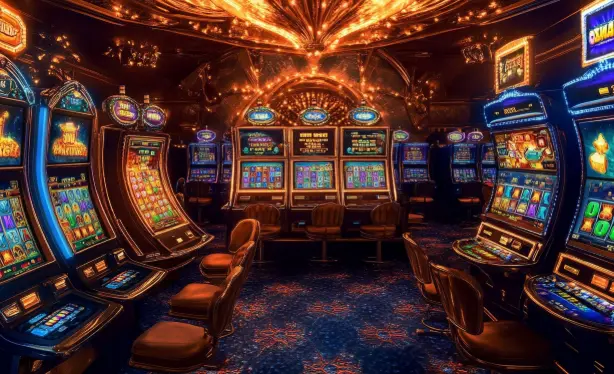
The Honolulu casino cruise ship loophole is not a glitch in maritime law enforcement; it is a structural arbitrage built on Hawaii's peculiar status as a foreign port for gaming purposes while remaining a U.S. state for everything else. Hawaii has no commercial casino gaming. Zero. Not a single licensed slot machine operates legally on the islands. Yet a vessel departing Honolulu Harbor and crossing into international waters can flip its gaming floor on the moment it clears the three-mile territorial limit, and operators have been exploiting this for years. 🎰
What the industry calls the Honolulu casino cruise ship loophole is really a jurisdictional sleight of hand. Federal law governs gambling on U.S.-flagged vessels, but the moment a ship is foreign-flagged and outside state waters, the calculus changes entirely. Hawaii's own gambling statutes stop at the shoreline. The Coast Guard enforces federal rules in federal waters, but those rules do not prohibit casino gaming aboard foreign-flagged vessels in international waters. That gap is the entire game.
Why Hawaii's Foreign Port Status Changes the Math
Here is the part that trips up compliance auditors. Hawaii is treated as a foreign port for certain maritime and customs purposes under the Passenger Vessel Services Act framework, even though it is a U.S. state. That designation creates a bizarre operational inversion: a cruise ship can position itself as operating between foreign ports when it never actually leaves U.S. jurisdiction in any meaningful sense. The Hawaii foreign port status is the fulcrum this entire scheme balances on, and operators know it cold.
This is not theory. It is the same mechanism that allows foreign-flagged cruise lines to run Hawaii-only itineraries that would otherwise violate cabotage rules. The gaming floor rides along on the same legal wave. On paper, the ship is a foreign port of call. In practice, it is a floating casino anchored to a state that has banned the product. That contradiction is the loophole, and it is wider than most regulators want to admit. ⚓

Algorithmic Yield Modeling on the Floating Floor
From a hardware and yield perspective, the economics are brutal and beautiful. A vessel carrying 2,000 passengers on a four-hour sunset cruise can run a single deck of 120 slot machines and 16 table positions. At a conservative 85 percent return-to-player, the house edge grinds out predictable revenue per passenger-hour. Operators model this in real time, adjusting machine denominations and table minimums based on the demographic load. The ship is not a casino; it is a yield-optimized algorithm with a hull.
What separates the amateurs from the operators is how they treat the transition window. The gaming floor stays dark until the vessel clears the territorial boundary. Then it goes live. The system timestamps every machine activation against GPS coordinates. If a single activation fires inside state waters, the entire operation is exposed to forfeiture. This is where the real engineering discipline lives, and it is why the Honolulu casino cruise ship loophole punishes sloppy execution without mercy.
Regulatory Blind Spots and the Coast Guard Gap
The enforcement layer is thinner than the public realizes. The Coast Guard's jurisdiction over gambling on foreign-flagged vessels in international waters is functionally passive. State regulators have no authority beyond the shoreline. The result is a genuine no-man's-land that operators exploit with surgical precision. Nobody wants to test the precedent in court because the precedent might collapse the entire model. That mutual reluctance keeps the loophole alive.
The Hawaii foreign port status dimension adds another layer of legal insulation. Because the state is treated as a foreign port under federal passenger vessel rules, opponents who try to argue that the cruise casino is a Hawaii-based gaming operation hit a wall. The federal framework already classifies the itinerary as foreign-flagged and foreign-port. That classification is not a side note; it is the load-bearing wall of the whole structure. 🛳️
What Happens When the Boundary Gets Tested
Watch the GPS logs. Any operator running the Honolulu casino cruise ship loophole who fudges the territorial boundary by even a few hundred meters is inviting catastrophic exposure. The compliance margin is measured in nautical miles, not goodwill. When a vessel drifts back inside state waters with an active gaming floor, the evidence trail is digital, timestamped, and unforgiving. The Hawaii foreign port status that protects the operation in international waters evaporates the instant the hull crosses back into state jurisdiction.
The structural arbitrage holds only as long as the federal classification stands and the boundary discipline holds. Operators who understand that keep the floor dark and the logs clean. Those who do not become case studies in how fast a loophole closes when the coordinates slip.